Friday, October 16, 2015

Best Buy Coupons 20% OFF Entire Purchase Small Appliance

Enter Best Buy Coupons 20% OFF Entire Purchase Small Appliance. Take Up to 60% OFF Hottest Deals of the Week + FREE Shipping on orders over $25 at Bets Buy!!!

Shop from the list of small appliances below and enter the coupon code SAVE20 at checkout to receive your savings. Plus free shipping on orders $35 and up.
To shop in store, print this coupon and present it to the cashier at checkout.

Markdowns taken from regular prices. Not valid with other coupons or offers. Excludes 
iRobot Roomba 800 series, Breville, Magic Bullet, NutriBullet, Nespresso, Vitamix, LG, 
Philips, Samsung, Smart Scales, thermostats and all air conditioners. Excludes Best Buy 
Outlet and Marketplace items. Excludes special order products. No copies. No cash value.

Best Buy Promo Codes October 2015: 5 Tips to Increase the Longevity of Your LED TV

>>>Best Buy Promo Codes October 2015 now offers 10% OFF 1 Regular-Priced LCDs! Enter Buy Promo Codes during checkout for the discount October 2015. View the Best Buy weekly ad and Deal of the Day online and find a great deal with special sale prices this week at Best Buy.
LED TVs provide beautiful and bright pictures, but they also come with a high cost investment. No one wants to spend thousands of dollars on a TV only to have to replace it in a few years. By understanding how their TV works, there are several tips and tricks buyers can use to help increase the longevity of an LED TV. Following these tips allows buyers to make a wise investment when purchasing these televisions.

LED LCD TVs

There are two types of LED televisions currently on the market right now. The one most people are familiar with is the LED LCD TV, which is often shortened to just LED TV. In truth, these are not pure LED TVs. They use an LCD screen that is enhanced with LED technology instead of the traditional fluorescent tubes used in normal LCD TVs. This allows the TV to be incredibly flat, usually only an inch or so thick. LED LCD TVs use either LED backlights, which are placed directly behind the screen, or LED lights around the edge. Both types have their advantages and disadvantages. Backlit LED LCD TVs can produce deeper blacks because the tiny lights are turned off, but because the light-to-pixel ratio is not the same, this can also cause a darkening effect on other areas of the screen. Edge-lit LED LCD TVs do not have this problem, but they also cannot reproduce the same deep black levels as backlit LEDs.

OLED TVs

Organic Light Emitting Diodes, or OLED, is the second type of LED TV and the only one that uses pure LED technology. Because of this, OLED TVs do not have the problems associated with either plasma or LCD TVs. Instead of using color filters like LCD, or UV light like plasmas, OLED TVs create the basic colors of red, blue, and green by transmitting electricity through different materials that create a glow. This results in incredibly thin TVs with high brightness and contrast levels. Because of this superior picture quality, OLED TVs are the most advanced thing to hit the TV market. Currently, OLED TVs tend to be on the smaller side, but as the technology catches up, the future will see bigger OLED TVs.

TV Lifespan

One of the questions that should be asked before purchasing a TV is how long the expected lifespan will be. Keep in mind that TV lifespan does not mean the TV will just die once it hits some magical number. Instead, lifespan refers to how bright the TV remains as it ages, compared to when it was new. Once a TV has diminished to half the level of its original brightness, it is considered to have reached the end of its lifespan. In other words, lifespan refers how dim a TV becomes before it is unwatchable. Of course, the truth is that all TVs dim with age. It was true of the old CFL tube TVs, and it is true of all the HDTVs that exist today. So how long does an LED TV last before it becomes unwatchable? Numbers vary depending on different manufacturer claims, but it is often estimated to be between 60,000 to 100,000 hours.

What Causes Dimness?

Why do LED TVs get dim over time? The lights simply wear out, much like an old light bulb will start to grow dim before it utterly dies. LED LCD TVs use white lights, which do not last as long as their color counterparts. This is because the white lights have to be exceptionally bright. Therefore, they will start to dim faster than the other components. Some OLED TVs use white lights, while others simply use RGB (red, green, blue) lights. In the case of OLED, blue lights always dim faster than red and green. Again, this is because the blue light is brighter than the other two. However, advances in technology have managed to bring blue LED lights up to speed with their other color counterparts. In fact, it was this leap forward that led to the creation of OLED TVs in the first place.

Protecting Longevity

Now that the basic difference between LED TVs has been explained, as well as the reasons behind the limits on TV lifespans, buyers should learn ways to help the TV last longer. Keep in mind that it is the brightness of the TV that must be protected. As long as the TV screen stays bright, it will continue to last. Once it starts to dim, its performance will suffer. Use these following tips to help keep the LED TV looking as bright as new.

Turn Off the TV When No One Is Around

This probably seems like common sense advice, but many people simply leave the TV running all day as background noise. While they are busy doing other things, the LED TV is busy conducting electricity through its lights. 60,000 hours might seem like a long time, but if a TV is left on as background noise for just 3 hours a day, that easily equals over 1,000 hours a year. Many people leave their TVs on for far longer than 3 hours a day without watching them, which only increases the number of hours being wasted. Turning the TV off when nobody is watching is probably the simplest way to increase the longevity of the LED TV. Not only will the TV last longer, the power bill will also be cheaper.

Adjust Brightness

Unless the house is as brightly lit as the showroom where the TV was purchased, there is no need to keep the LED TV at high brightness levels. Remember that the hours used to determine TV lifespan are based on average TV settings. Running a TV at high brightness levels can easily cut 60,000 hours into 30,000 hours, since the TV has to work twice as hard to keep up. Once the LED TV is purchased, adjust the brightness levels. Different manufacturers have separate brightness settings. "Film" or "home" settings work well enough on most TVs. For those who display brightness based on room, select either "dark room" or "medium room." This small but highly effective adjustment will help keep the LED TV looking its best for years.

Adjust Contrast

Contrast is the control on the LED TV that measures the difference between the brightest and the darkest colors. The higher the contrast, the greater the power the TV uses. This, in turn, will decrease the television’s longevity. In the showroom, most LED TVs are set to "dynamic" or "vivid." While either setting works best in brightly lit rooms and truly shows off the TV’s power, users should not leave the television on these settings at home. Doing so will burn through the LED lights faster. Instead, set the contrast to "standard" for the lowest power usage or to "movie" for enjoying HD broadcasts. Both of these settings use less energy than the "dynamic" and "vivid" options.

Use a Voltage Regulator

The LED TV is not the only electronic device in the house taking power. Every time the AC comes on or the furnace starts, electricity is used. This causes temporary power dips to other electronics, like the LED TV, which in turn affects the TV’s processes. In fact, one of the reasons why many LED TVs fail early in life is not because of their display technology, but instead because their power caps get busted from power surges or dips. Install a voltage regulator with a battery backup that can provide additional power during dips. Not only will it protect against hazards like power surges caused by lightning, it will help keep the TV operating efficiently no matter what other electronics are being used in the home.

Ventilate

The LED TV is going to be using a lot of power in the home. This power produces a lot of heat, which is removed by the ventilation system. However, many people install their LED TVs without giving them room to breathe. This affects the ventilation system, keeping the television hot. LED TVs do not last long in high heat conditions, as their internal parts start to be affected. Make sure that the TV has at least four inches to breathe around the ventilation vents. This means if it is a flat panel TV, but the vent is on the back of the television, do not install it against the wall. Instead, install it on a tabletop or entertainment center where the vent is four inches away from the wall.

Conclusion

LED TVs are expensive to buy, but the exceptional picture display is worth the cost. Remember, the picture is the reason why the television was bought in the first place. While these tips should be used as guidelines for increasing the longevity of the LED TV, do not sacrifice picture quality altogether. Adjusting the brightness and contrast are crucial for conserving power, but do not do so at the expense of the viewing experience. Set the television to levels that still look good while saving energy at the same time. With the exception of purchasing a voltage regulator, which should be done anyway to protect the TV from power surges, all of these tips are simple and free. Heading these suggestions will help any LED TV live for many years.

Thursday, October 15, 2015

Latest Best Buy Promo Code October 2015

Best Buy Promo Code October 2015: Go through Best Buy Promotional Code 2015 and save up to 60% at the Best Buy Outlet - Clearance, Open Box and More! While supplies last!

$100 OFF Select MacBook® and iMac® Models, Plus Free Shipping
$100 OFF Select MacBook® and iMac® Models, Plus Free Shipping at Best Buy. No code needed!

10%–25% OFF Select Floor Care + FREE Shipping On $35+
Buy Floor Care and save 10%–25% OFF select ones + FREE Shipping on oders of $35 or more at Best Buy!

10%–20% OFF Select Small Kitchen Appliances + Free Shipping On $35+
Best Buy now offers 10%–20% OFF Select Small Kitchen Appliances + Free Shipping On $35+!

Up to $400 OFF On Select LG Kitchen Packages
Best Buy now offers Up to $400 OFF On Select LG Kitchen Packages! No code needed!

Up To 60% OFF at The Best Buy Outlet - Clearance, Open Box and More
Go through this link and save up to 60% at the Best Buy Outlet - Clearance, Open Box and More! While supplies last!

Wednesday, October 14, 2015

BEST BUY PROMO CODE OCTOBER 2015: 9 Tips for Longer Laptop Battery Life

>>>BEST BUY PROMO CODE OCTOBER 2015: Take BEST BUY PROMO CODE OCTOBER 2015 OFF laptop and battery with using this Best Buy promo code during checkout! Limited time offer!
If you're in a tough spot right now, there are things you can do to extend the battery life immediately. None of these actions will actually increase the amount of power left in the battery, but instead will reduce the amount of power the laptop is using, letting you squeeze in a few more precious minutes before the battery goes kaput. The name of the game in these instances is power consumption, and you need to reduce yours to as little as possible.
1. Activate Your Laptop's Battery Saver Mode or Eco Mode
Designed with these sorts of circumstances in mind, most Battery-Saver or Eco modes will engage a number of automatic changes to lengthen usable battery life—many of the same changes we'll be making here. This saved profile will adjust your laptop's settings and shift components into low-power states to help you ration your remaining juice a bit longer.
Once you've turned on the automatic battery-saver tool, there are still plenty of steps to take to eke out even better efficiency. This is done by turning off unnecessary devices, adjusting settings to reduce power consumption, shutting down unwanted apps and processes, and adjusting your activities to use less power.
2. Disable Unused Devices and Ports
The easiest way to reduce power consumption is to simply turn stuff off. Every component in your laptop needs power to function, but that doesn't mean you need to power all of those components all the time. Start by disconnecting any unneeded peripherals (like a USB mouse or external drive) and turning off the biggest power hogs, like Wi-Fi and Bluetooth radios, graphics processors, and unused optical drives.
WARNING: Before disabling any component or device, stop and make sure that this device is not in use, and that it is not essential to continuing operation of the laptop. For example, you DO NOT want to disable the hard drive that houses the operating system, or the processor the runs the entire laptop. Only disable those devices you are comfortable turning off.
To disable unused devices on a Windows system, open up your system's Control Panel and find the Device Manager. In the Device Manager, individual components are grouped by category. For example, Network Adapters will often include both the LAN adapter, which provides Ethernet connectivity, and Wi-Fi, for wireless networking.
9 Tips for Longer Laptop Battery Life
The four standard candidates for saving power are the graphics card (found under Display Adapters), the optical drive (found under DVD/CD-ROM Drives), and the Ethernet and Wi-Fi adapters (under Network Adapters). Find the device you want to shut down within the relevant category. Right click on the device name, and select "Disable" from the drop down menu.
While you're in the Device Manager, you can also turn off any unused ports. Just like an extension cord left plugged into an outlet, these unused plugs still have power going through them, and losing some in the process. The actual impact on battery life will be minimal, but if you need to eke out another minute or two of life, this will help. Take a quick glance at your ports, and turn off anything that's not being used, like USB ports with nothing connected to them.
While you can disable USB ports on a Mac using the terminal program, it's something that IT administrators would use to lock down Macs for security purposes. We don't recommend doing it as an end user because it may make your system act up. You can, however, disable Bluetooth and Wi-Fi from the Menu bar at the top of the screen.
3. Adjust Your Settings
While you'll still have to use the display and the keyboard, you can adjust the settings for each to reduce power consumption. One often overlooked power drain is keyboard backlighting. Unless you're in the dark, and need the backlight just to make out each key, turn the backlight off entirely. You can typically assign a hotkey for this function.
The next power drain is your screen. While you need to keep the up and running to use the laptop, you don't necessarily need it running at 100-percent brightness or full resolution. Many laptops will have hotkeys for increasing and decreasing the screen brightness, but if not, it can be adjusted in the control panel. Reducing the display to 50 percent when you're running on battery power can add a significant amount of time.
Additionally, if you're simply typing up a document, you don't need all of the detail offered by a 1080p or higher display. Dialing down the screen resolution to a basic 1,366-by-768 resolution or lower reduces the amount of power used in graphics processing without negatively impacting your ability to work, letting your laptop a bit longer than at full resolution.
Finally, turn off or turn down the sound. If you need to hear, drop the sound down as low as you can, and consider switching from the laptop's larger speakers to a set of tiny earbuds to get the audio piped right to your ears. Whenever possible, just mute the laptop altogether. That way, the speakers won't be getting any power, and you'll buy yourself some more precious time.
4. Turn Off Apps and Processes
It's not just the hardware that's stealing your battery juice. Multiple apps and processes running on your system will also chew through battery life more quickly. As with the hardware, start by turning off anything that isn't being used.
In Windows, start by taking a look in your System Tray, the collection of icons in the lower right corner of the desktop, next to the clock. On the left end of the System Tray, select the icon to display hidden icons. Take note of which apps are running in the background.
Open up the Task Manager by pressing Ctrl+Shift+Esc, or use Ctrl+Alt+Del and select Task Manager from the menu. Once in the Task Manager, look at the open apps—you may find that a program or two have been left running simply because you forgot to close a window instead of minimizing it.
Next, go to the Processes tab. This shows you what processes are currently running on your machine. While some of these are needed, some, like those associated with music and video players or cloud storage services (like Dropbox or Google Drive) can be disabled without causing any problems.
For MacBooks, the process is a little different. Take a look at System Preferences > Users&Groups for a menu called Login Items. Delete any power-hungry programs that you don't need anymore, or disable things like Google Chrome's automatic launch at startup. You can also see programs that are using a lot of power at any given moment by holding down the Option key, then clicking on the battery indicator in the Menu bar. Alternately, you can open the Activity Monitor utility to see a list of all the programs and processes you currently have open , and which of these are using the most power. You can stop these processes by selecting the program and then clicking the Stop icon. Power Nap is an Apple OS X feature that checks your email and twitter feeds for activity while the system is asleep. If you are trying to maximize battery life, it would be wise to turn that feature off.
5. Simplify
You can also stretch your battery life by simplifying your own activities. Multitasking is nice when you have full power, but running several programs at once puts a greater load on the processor and draws more power. Adjust your computer use by sticking to one application at a time and avoiding resource-intensive programs.
Start by single-tasking—if you need to type up a document, close any additional programs. You'll get longer battery life by not running Spotify in the background. If you need to keep some tunes going, switch from streaming media to locally stored songs—you'll still be using some extra power to play them, but streaming media over Wi-Fi also uses the laptop's wireless radio.
You might also benefit from switching to simpler tools for the same tasks, like opting for a simple text file instead of a Word document. With fewer features and none of Word's automatic actions (like Spell Check and Autosave), you can do all the writing you need without using quite so much power. Some activities you'll want to avoid entirely, like photo and video editing tools, which place a significant load on the processor and graphics card, and are real power hogs.
By eliminating unnecessary power uses, you should be able to extend the life of your battery in those moments that you find yourself high and dry.

Tuesday, October 13, 2015

Best Buy Promo Code October 2015: 9 Must-Know Tips Before You Buy a New TV

>>> Use Best Buy Promo Code October 2015 for 20% OFF on  TVs, LCDs, Audio and Electrics items! FREE Shipping inlcuded for using Best Buy Promo Code 2015 before October 2015!
When considering buying a brilliant TV to stand against or hang from a wall as the centerpiece of a living room, many just think about two factors: How big it is and how much it is. For some people, buying a TV may never come down to anything more than that. But if you truly want to be getting the most for your money, you’ll want to understand what’s really going on with the TVs you check out.
As with all electrical technology, there’s a profound level of complexity and most of us could never hope to understand it — though many of us also wouldn’t care to know how it all works. What really matters when we’re shopping is what it all means to us as the user of the product. So, let’s examine the aspects of most importance in TVs to get acquainted with what they mean for you.

Display Types

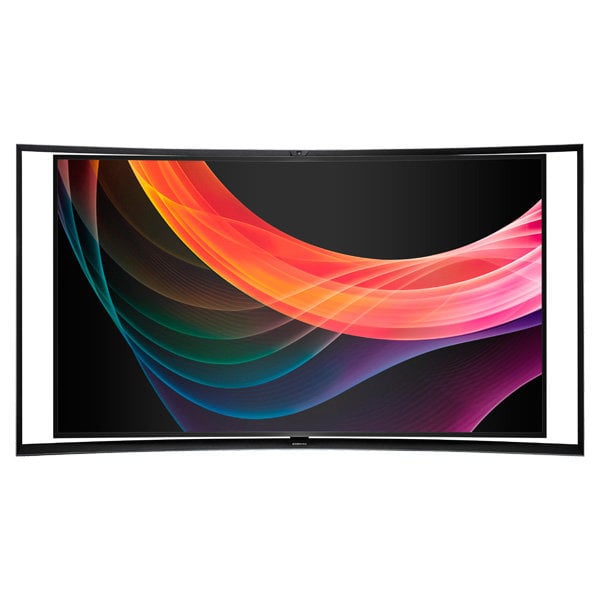
Samsung OLED
Source: Samsung.com
One of the first things you’ll want to do to narrow down your browsing is to figure out what type of TV you want. There are LCD TVs, LED TVs, OLED TVs, and plasma TVs to chose from.
Plasma: If you’re planning on getting a relatively big TV and are going to focus on high-quality cinematic viewing, a plasma TV might be for you. They tend to have excellent color quality and a high contrast ratio (we’ll get into that later), creating a beautiful image. On top of that, they often have a wide viewing angle, so it’s easier for multiple people to gather around the screen and still see a clear picture from where they’re sitting without odd color distortion or no image altogether. They aren’t the brightest TVs though, so ambient light can become a particular problem for plasmas.
LCD: Liquid Crystal Displays are pretty common to find and may be the cheapest option. They’re energy efficient and usually have good color. For simple use, they’ll probably get the job done. However, if you’re trying to do high frame-rate gaming, they might not be the best choice. On top of that, for a home theater, they tend to have very limited viewing angles, so the person sitting right at the side of the screen is going to have a really hard time watching anything.
LED: TVs branded as LED are actually just LCD TVs that use LEDs as a backlight for the liquid crystals in the display. If it has “local dimming,” it will have an advantage when it comes to contrast ratio, which is a plus. On top of that, they are less power hungry than standard LCDs and Plasma. Unfortunately, they may be more expensive.
OLED: Organic Light Emitting Diode TVs actually are different from LCD TVs. OLED TVs use colored LED lights to create the image, so they save on power, though not always as much as LED TVs. They do manage to create a high quality image, and a bright one at the — so they may be best for those planning on watching TV a lot during brighter hours when a glare could be a problem. Unfortunately, it’s a costly product to make, so it will force you to pay a bit more. They also suffer from some of the viewing angle problems that effect LCD TVs.

Contrast Ratio

I threw this term around lightly in the last section, and some manufacturers will throw this term around lightly as well. Many companies determine the contrast ratio of their TVs very differently. The contrast ratio is simple the difference in brightness between the darkest black and whitest white the TV can produce. With a low contrast ratio, black areas of an image might appear more like a washed out gray, or bright areas may lack vibrance. You’ll often see numbers like 2,000:1 or 5,000:1 to indicate the contrast ratio, and the bigger that ratio, the better — in theory.
Because manufacturers measure and report the ratios differently you might come across a TV with a 1,000,000:1 contrast ratio that still won’t create as pretty an image as a TV whose manufacturers reported as having only a 5,000:1 contrast ratio. Your best bet is to check out an external review site that tests contrast ratios. Otherwise, be sure to view the TV in a dark place, as ambient light will make it hard to tell how dark the TV’s black can get. If you know you might not have time to do all that while browsing, just pay attention to when a contrast ratio is advertised as “true” or “native” as opposed to “dynamic.” The true or native contrast ratios are more likely to give you numbers within reason that can be compared to other TVs.

Color reproduction/color depth

Source: Thinkstock
This isn’t very likely to come up, as most TV manufacturers will keep their color depth at a level that won’t frustrate consumers, but if you’re shopping for a real bargain-priced TV, you may want to make sure you get one with a bit depth of “8 bits per channel” or more, with particular emphasis on “per channel.” This will ensure the TV is able to create enough colors to satisfy the human eye and present photo-realistic images.

Aspect Ratio

This one shouldn’t take much thought. The aspect ratio is simply the ratio of the TVs width to its height. It has no particular effect on the quality of the image created by the TV. It’s most important for what you plan to view most, as you’ll want to be sure the TV’s aspect ratio is close to the aspect ratio of whatever you watch most. If you watch a lot of films, you’ll probably be looking toward wider aspect ratios, so you don’t have to leave a large portion of your screen functioning as an unspectacular letterbox. You’ll probably find a lot of 16:9, and that will probably be good enough, but if you want to watch a lot of modern, widescreen Hollywood movies, you may look around for 2.4:1.

Refresh Rate

The refresh rate of your TV is the number of times the image on the screen is refreshed per second. It’s measured in hertz, so you might see 60Hz or 120Hz listed on the box. Fortunately, you can trust this number a lot more than you could trust the contrast ratio. Higher refresh rates create a smoother flow between images and reduce motion blur — handy if you watch a lot of action movies. High refresh rates can also be good for gaming.
It’s important to keep in mind that the TVs refresh rate might not always match the refresh rate of the content going in. If you’re running and HDMI cable from your 60Hz computer to watch something from it on your 120Hz TV, the TV will have to do something to fill in the gaps. Some TVs will do what is called interpolation, which creates an image that fits between images it’s given, effectively doubling the frame rate of whatever you’re watching. Sometimes this feature is desirable, other times it creates an odd effect that makes the video too smooth and seem more like a soap opera than a feature film. Keep an eye out for features with the word “smooth,” “motion,” or “scan” in them, as that will likely indicate interpolation — fortunately, it generally can be turned off.

Input lag


Knowing that, it’s obvious that gamers should look for TVs with shorter lag. Some TVs will feature a special gaming mode that allows the input signal to skip through certain processing that would otherwise create lag.This specification is of particular importance for gamers. Input lag is the time gap between an input going into the TV and the TV creating the image. The greater the lag, the further behind what’s on the screen is from what’s actually happening in the game. Aside from just making the controls feel unresponsive in a game, a long lag can make a fast-paced game impossible.

Inputs

The TVs you look at may have more input options than you will ever know what to do with. What’s important is that you know what you will be trying to connect to your TV. If the TV has a coaxial F connector, you don’t need to worry about that if you only plan on plugging things in via HMDI and it has plenty of those.
To input a signal from a computer, modern game console, or Blu-ray players, you’ll probably want HDMI inputs. If you feel the need to connect an old VCR or DVD player, you’ll want to make sure it has analog composite inputs. For a cable box, look for a coaxial cable input. Also, if you’re planning to connect a device that uses HDCP (High-bandwidth Digital Content Protection), like many Blu-ray players, you’ll want to make sure that the TV you buy also uses HDCP.

Hold on, what’s a Smart TV?

For some, a smart TV might actually be the route to go. Smart TVs connect to the internet and can stream content that way. They often include applications like Netflix so customers require fewer devices to get started with their movie or TV watching. Some connect via Wi-Fi, while others might only have an ethernet jack. If you don’t want to deal with a lot of wires and want an uncluttered space around the TV, a smart TV might be the best option.

Well, what’s a 4K TV?

You might be seeing a lot start to pop up about 4K TVs. Just as 1080 was the buzz number when HD TVs were coming into fashion, 4K is simply the next step. A 1080p screen would have 1,080 pixels in each vertical column and 1,920 pixels in each horizontal row. The 4K defies the convention by instead counting the horizontal pixels.
What’s important to note is that the number of pixels on a screen doesn’t define the clarity of the image, but rather the density of those pixels does, along with the source resolution. If you have a 24″ 1080p TV and compare it to a 48″ 4K TV, they will have about the same pixel density. So, unless the two TVs are displaying images that are higher than a 1080p resolution, they will have the same level of clarity, but the 4K TV will show it at four times the size, which may still help you see details better. Of course, if a 4K TV and 1080p TV are the same size, the 4K TV will have notably higher image clarity for everything above 1080p resolution. Just keep in mind that a TV being 4K doesn’t mean you should ignore all the other aspects of the TV.
Understanding all of these details a little better should make it a lot easier for you to know what you’re getting when picking out a TV to complete your home theater, gaming rig, or just that empty space on your kitchen counter.

Monday, October 12, 2015

Best Buy Promo Code September 2015: 7 Tips Every Smartphone Owner Should Know

Use Best Buy Coupons 20% OFF Entire Purchase 2015 to get 20% OFF on Entire Purchase!  Best Buy Promo Code September 2015 w/ Free Shipping, Exclusions Apply!
Whether you use an iPhone, an Android phone or a Windows phone, some tips are universal. Follow this advice, and you’ll save a lot of time, money and heartache in exchange for just a little extra effort. Here’s what you need to know to get more out of your smartphone, regardless of who made it:

Back Up Your Photos

Microsoft
Don’t leave the fate of your photos to chance with manual backups. Instead, set your phone to automatically back up photos online so you’ll never lose any memories if your phone is lost or stolen. You’ve got plenty of options for doing this, many of which allow you to just set it and forget it.
Dropbox’s Carousel app and Microsoft’s OneDrive app can automatically back up photos to cloud storage, though you’re limited to 5 GB of free storage for the former and 7 GB for the latter. (Windows Phone users can download the unofficialCloudSix for Dropbox app, or use their phones’ built-in OneDrive camera backup function.) You can also use the Google+ app foriOS or Android, which backs up unlimited photos if you go into settings and limit resolution to 2048 pixels. Or use Flickr, which gives you 1 TB of storage for high-resolution photos and videos.
Here’s the really important part: Bugs happen, and data gets lost even when you think you’re backing it up. Use more than one of these services at the same time–and keep manually backing up photos to your computer–to drastically lower the odds of losing anything.

Get Your Music from the Cloud

Google
Why spend an extra $50 or $100 on more storage for your phone when you can lighten the load by storing your music online? Google Play Music can store up to 20,000 free songs, which you can then access through apps for iOS and Android (or unofficial apps for Windows Phone). Just download Google’s Music Manager software, and have it upload your computer’s music folder. If you need more storage, Amazon Cloud Playerwill store up to 250,000 songs for $25 per year. You could also subscribe to a service like Spotify, Rdio or Beats Music for $10 per month, and build your own cloud music library from millions of tracks.
What if you’re not online? All of these services allow you to download songs, albums or playlists for offline listening. But because you’re using a smartphone, and most smartphones now have 4G LTE data connections, the odds are increasingly slim that you won’t be able to get to your music.

Check Out Alternative Browsers and Email Apps

Dropbox
It’s easy to stick to the defaults for core functions, but if you take some time to try alternatives, you might find one that’s better for your needs.
Mailbox is a great email alternative for iOS and Android, letting you dismiss emails with a swipe, attach files directly from Dropbox and set reminders for messages that you want to answer later. Gmail users should also check out Google’s own Gmail app for iOS, as it’s better than the iPhone’s default Mail app for searching and for viewing long conversation threads.
For web browsers, Chrome and Firefox both let you view any tabs you have open on another device, though Firefox is Android-only. Dolphin Browser gives you a desktop-style tab view and includes frilly features such as gesture controls and add-ons.

Use Some Logic to Sort Your Home Screens

Apple
Has your home screen turned into a chaotic mass of unorganized apps and folders? Take a few minutes to sort things out, and you’ll save yourself some headaches later.
Take your absolute favorite apps (not counting the ones on the bottom tray), and place them directly on the bottom two or three rows of your main screen, with no folders. That way, you can easily reach them without stretching your fingers. Above those rows, use folders for your favorite app categories, or add a widget or two on an Android phone. (I like to have a “Utilities” folder for random things like the calculator, voice memos and reminders.)
For subsequent screens, try organizing them by use case, so you have a page for games, a page for reading and so on. Ideally, you won’t fill every page, and your phone will have a logical way to grow as you acquire more apps.

Use Your Phone as a Wireless Hotspot

You wireless carrier might prefer if you signed up for a tablet data plan, but you don’t have to. In most cases, it’s cheaper to use your phone as a wireless hotspot, which can provide Wi-Fi to any tablet or laptop. This service is already included if you have a shared data plan on AT&T or Verizon, and while it’s not quite as convenient as having 4G built into your tablet, it’s a lot cheaper in the long run. Check out our guide to setting it up and figuring out the costs.

Get to Know Your Shortcuts

Apple
There’s almost always a faster way to do things, it’s just a matter of memorizing the necessary swipes, pinches or long-presses for your particular phone. On the iPhone, for example, you can swipe up from the bottom edge to bring up quick settings, or double tap the home button to bring up a recent apps list. You can then close an app (say, if it’s misbehaving) by swiping upward on it. (iMore has a good list of other hidden iOS gestures.)
And here’s a cool trick for Android: When viewing notifications, you can either pinch outward or long press and drag down to expand a notification, showing a larger overview of your emails or messages. In general, Android shortcuts are a bit trickier, because each phone has its own button layout and software tweaks, but if you play around with long-pressing or double-tapping on each of the main navigation buttons, you may discover some hidden functions. (The Samsung Galaxy S5, for instance, is filled with these shortcuts.)

Don’t Buy Insurance (Unless You’re a Klutz)

Next time a phone salesman tries to scare you into buying an extended warranty or insurance, keep this old trick in mind: Instead of buying the insurance, just set aside the money you would have paid, putting it into a piggy bank, savings account or whatever. Do this for all the electronics you buy where a warranty or insurance plan is offered, and chances are you’ll save enough of your own money for a repair or replacement if something does go wrong. And you won’t even have to pay an outrageous deductible. (One exception: If you have a history of losing track of your phone, maybe insurance is a good idea.)
>>> BEST BUY PROMO CODE SEPTEMBER 2015: Take $2 OFF New CD Release Got Your Six by Five Finger Death Punch with using this Best Buy promo code during checkout! Limited time offer! <<<

Friday, October 9, 2015

Best Buy Coupons 20% OFF Entire Purchase 2015 for Pet Garmin - Delta Upland Electronic


Use Best Buy Coupons 20% OFF Entire Purchase to get 20% OFF on a Garmin - Delta Upland Electronic.  Paste Best Buy Promo Code 2015 during checkout for 20% OFF Dog Training Device Headphone! 


This Garmin Delta Upland 010-01069-06 electronic dog training device includes a beeper, which features 4 hunt sounds, including silent, and 2 point sounds, including hawk scream, plus a locate feature, to help you locate your bird dog.

Product Features

Handheld unit and dog device

With 18 levels of continuous and 36 levels of momentary stimulation, vibration and tone work with most dog breeds, so you can easily train up to 3 dogs (with 2 additional dog devices, not included).

Built-in BarkLimiter

Helps reduce undesired barking. Recognizes the difference between wanted and unwanted barks, vibration from scratching and scraping and other dogs' barking to prevent falsity and over correction.

Beeper

With a locate feature is attached to the training collar and is remotely operated via the handheld unit, allowing you to locate your bird dog and know when it's on point. Includes 4 hunt sounds and 2 point sounds.

3 front action buttons

Make it easy to select a desired configuration. Separate side buttons let you quickly switch between the configuration levels and the dog being trained.

Easy-to-read LCD

Shows the selected correction pattern and the current dog being trained in clear detail.