Showing posts with label Best Buy now offers 10% OFF. Show all posts

Tuesday, June 21, 2016

10 Easy Tips to Get the Most Out of Your Microwave

Best Buy Coupons 20% OFF Entire Purchase Enter this Best Buy 20% OFF Coupon Code  during checkout to get 20% 50%  Promo Code Off  for activity trackers & pedometers. Check Best Buy 20% OFF Promo Code now!

We all know that a good microwave oven is quick and easy to use, but not many people know how to use it to its full potential. The following 10 tips will help you get the most from your microwave and make great tasting meals practically every time.
Microwaves
  1. Food should be arranged evenly sized pieces. They should be arranged in a circle. If the pieces are different sizes it is best to place the thicker pieces on the outside with the smaller pieces on the inside.
  2. If you are cooking foods that have a skin e.g. baked potatoes. Make sure you pierce the skin, as this will prevent potatoes from exploding, due to a build up of steam underneath the skin. Eggs should never be cooked in their shells, as the resulting expansion may cause serious injuries.
  3. The container you use to cook in the microwave oven should be a bit larger then the dish you would choose for a conventional oven. The container should be labeled as suitable for microwave use.
  4. Try to find cooking container that are round or oval as this shape helps the food to heat up evenly.
  5. When recipes or package instructions give a broad recommended cooking range, start to check if the food is cooked at the lower end. For example if the range is 2-3 minutes then start checking at 2 minutes.
  6. When using microwaves that don’t have turntables, at regular intervals stop the microwave and rotate the food. This prevents “hot spots” forming, and will ensure even cooking.
  7. If you have defrosted or partially cooked foods in the microwave it is essential for safety to continue to cook the food either in an oven stove or grill. Keeping partially cooked foods in storage can lead to food poisoning bacteria to start developing.
  8. Covering the food with lids or plastic wrap whilst being cooked in the microwave, can help to retain moisture and cook more evenly. Always leave a small gap between the food and lid for the steam to escape.
  9. Once your food has finished cooking, make sure that you remove the container lid or plastic wrap away from you as the steam is very hot and there is a risk you could burn yourself.
  10. If you enjoy salt on your favorite dishes, apply after cooking,. This is because salt can cause foods to dry during the microwave process.

Thursday, June 16, 2016

5 Tips for Choosing the Best ‘Starter’ Instrument

Best Buy Coupons 20% OFF Entire Purchase Enter this Best Buy 20% OFF Coupon Code  during checkout to get 20% 50%  Promo Code Off  for activity trackers & pedometers. Check Best Buy 20% OFF Promo Code now!
One of the most frequently asked questions we’re asked is ‘what is the best instrument for my child to learn as a beginner’. We find ourselves giving the same answer all the time, so what better way of answering this question for you lovely parents of potential musicians than by blogging about it! How very 2015!

Before we start…

Learning the piano is right at the top of the most ‘useful’ instruments to learn and is probably the most popular with first time learners. Obvious benefits include being able to read two clefs (basically, like being able to speak two languages) from the earliest grades, whilst students learning single line instruments only learn one clef and may struggle in later grades. The piano is a must if you’re serious about developing excellent musicianship in your child, but its worth knowing that progress can be much slower than in any other discipline because of the added difficulty in terms of co-ordination, dexterity and music reading, all of which is taught in the earlier stages of learning. Learning the piano can seem twice as difficult in comparison to other instruments in the beginner phase. Little pianists can take up to 3 years to feel like they can actually ‘play’, and that’s no reflection on their teaching, its just down to the fact that there is MUCH more to learn on the piano. Depending on the student, slow progress can put an early end to a potentially happy, long musical life. Additionally, pianists cant participate in school ensembles and you will need to invest in a decent piano for significant onward progress past Grade 2, which can be costly!
Perhaps piano isn’t always the correct answer so here are a few helpful tips to help you to find the best fit for your little Musician…

1. Choose an Instrument that will suit their age and physical ability

Younger students (between age 4-6) can find sitting still tricky and depending on their height and hand size/dexterity, some instruments may be to tough to handle. Consider instruments that are played in a standing posture like the recorder, violin or singing. You can buy half or even quarter sized instruments for smaller bodied students. Drum kit lessons are great for energetic little people where learning piano often requires stronger fingers, and is better suited to beginners of around age 7. Do approach instruments that require refined motor skills and co-ordination such as harp, some brass and electric guitar with caution for your first-timer. Luckily, music is music, so we recommend choosing an easier instrument to handle so that your young musician can start learning to read music before moving on to these larger, more cumbersome instruments.

2. Choose an instrument that fits with your family lifestyle

You’ll end up having an instrument in your home, where your kids will need to practice on it frequently! Perhaps that double bass isn’t such a good idea! Why not think about Instruments that break down into smaller parts like the Flute, Clarinet or Oboe.

3. Choose an instrument that you can afford

Even though pianos cost considerably more than other instruments, it is a one off cost, and you’re always able to find an instrument for good value at auction or in your local ‘bargain pages’. If your child chooses the violin, assuming that they begin on a 1/4 sized instrument, you may find yourself buying up to 4 new violins before they stop growing! There are many cheaper alternatives should you choose Brass (check out Tromba) but in general, recorders, flutes and guitars tend to be the cheaper instruments to start on. You may also want to consider carefully WHO you learn with. There are advantages to learning with a larger organisation where instrument hire is available, and *shameless plug alert*, we are ourselves an organisation that offer instrument hire as part of our learning packages. Yippeeee!

4. Choose an instrument that will be useful in your child’s later life

In the early stages of learning, being able to READ music is often more important than playing marvellously. Choose an instrument that will instil good musical literacy first, which could then also complement moving on to a ‘harder’ instrument to play. Singing is perfect for this! Not only will a student learn to internalise melody and sight sing, it complements moving on to woodwind instruments, as their understanding of how to use breath is already considerable.

5. Think about their Secondary School

Most children in the UK now have to compete for entry into better senior schools on musical grounds. If you want to set your kids apart from the thousands of pianists that will audition at the same time, we suggest aiming to study a rare instrument like the Harp, Cello, Oboe, Cornet or Baroque Recorder.
Any Questions or something to add? Just comment below! We’ll answer you straight away.

Thursday, May 26, 2016

How to Clean and Maintain Your Washer and Dryer

Best Buy  10% OFF Promo Code Enter this Best Buy 10% OFF Coupon Code  during checkout to get 10% 20%  Promo Code Off  for activity trackers & pedometers. Check Best Buy 10% OFF Promo Code now!
A while back Abby and I got some tips from Danny Seo on how to be smarter about how we did laundry. He had some great simple (green) tips that we implemented right away. He also was one of the first to point out the importance of maintaining the machines so that your clothes get clean, the machines stay efficient and you get the most out of your investment.
Washing Machine

  • Inside: A cup of white vinegar run through the warm cycle will break up mineral deposits and clean out any dirt caught in the drain or mechanism. Add vinegar to the wash when using a laundromat if you're concerned about what went in before your load. The vinegar will also serve to neutralize any lingering odors (including pungent leftover fabric softener)

  • Outside: A machine that is used a lot can end up accumulating grime in the corners and rim of the loading area. Use a sponge or rag with a solution of 50/50 water and vinegar to clean it out. Remember to wipe down the outside of the washer periodically and use the vacuum to suck the dustbunnies out from underneath the machine.

  • Level It: This great post on extending the life of your washer and dryer points out the importance of leveling your washing machine so that as it spins, it isn't causing undue wear to itself, the floor, or the wall near it.

  • Front Loaders: Some people have had issues with their front loading machines beginning to smell of mold or mildew . Apparently it isn't totally uncommon for an accumulation of detergents and water to create the smell. Try the vinegar trick, leaving the door open in between washes, and if that doesn't help, try some smelly washer.
Dryer

  • Lint: Clean the lint filter before every load. Every once in a while you can go beyond just cleaning the lint out with your hand and actually take the filter over to the sink and rinse it gently with warm water and a soft brush.

  • Exhaust: Check the dryer exhaust on the exterior of the house to make sure it's clear of debris and that the hot air is able to escape the flap vent without any blockages. The hose connecting the dryer to the outside world can also collect lint and dirt over time. To keep it as clear as possible, straighten out the kinks where the lint is likely to collect. The straighter the hose, the cleaner and less likely to cause a fire.

  • Outside: Use the vacuum and a damp rag to clear out any dust or dirt that has built up around the base of the dryer (or underneath). Make sure to wipe down the sides, the door and the rubber tubing that seals it on a regular basis.

Friday, April 15, 2016

How to Choose the Right GPS Watch

Best Buy promo code 10% OFFShop Week Long Black Friday Deals and Enter this Best Buy 10% OFF Coupon Code  during checkout to get 20% 10% Off Clearance Mobile Phone Cases. Check Best Buy 10% OFF Promo Code now!

A GPS watch is a tool that can enhance your training—if you pick the one best suited for you.
GPS watches track time, distance, pace and calories, and come equipped with numerous features and training aids. But it can be difficult to find the right watch with so many brands and models available.
Here are four questions to ask yourself when shopping for a GPS watch:

How Often Will You Use It?

Budget GPS watches cost around $100—about the same as a pair of running shoes. Figure out how often and how far you run to determine whether it's worth buying a GPS watch. Beginner runners might not benefit from using a GPS watch if their runs are short or infrequent.
A smartphone fitness app may be a better option for new runners. Most apps have the same functions as a basic GPS watch. They're also less accurate, not as durable, and come with fewer features.

What Will You Use it For?

GPS watches are most commonly used for running. But they can also be worn while cycling, swimming, hiking, skiing, rowing, or kayaking. Just about any outdoor sport can be tracked with a GPS watch.

It's important to think about the activities where you will use your GPS watch and ensure it has compatible features. For example, not all watches can be worn in the water. If you plan on swimming with your watch, make sure it's waterproof to at least 30 meters.Some watches are designed primarily for triathletes. They come with features that make it easy to quickly transition from one sport to another. If you are not a triathlete, determine whether a watch with these features would be useful.

Wednesday, April 13, 2016

Best Buy 10% OFF Coupon Code : How to Choose the Best Headphones

Best Buy promo code 10% OFFShop Week Long Black Friday Deals and Enter this Best Buy 10% OFF Coupon Code  during checkout to get 20% 50% Off Clearance Mobile Phone Cases. Check Best Buy 10% OFF Promo Code now!
Headphones can be an extremely important part of one’s daily life. The choice will change the way you perceive sensations in audio, from familiar sounds to the completely new. With so many brands and makes out there, you’ll want to find the perfect pair for your needs. In order to make the right decision, here are some helpful tips on how to pick the best headphones.

Before you buy a pair of headphones, ask yourself these questions:

1. How will you be using your new headphones? What exact purposes/situations?
2. Are you a professional or consumer user?
3. What environment(s) will you be using them in? How noisy can they be?
4. How many hours per day/week will you be using them?
5. What’s the budget?

With your answers in mind, let’s go through some specifics:
Sony MDR-7506 Professional Folding Headphones ($98),  Sennheiser CX 300-II Precision In-Ear Headphones ($36)
                                                                                 
The first important choice you need to make: Better (fuller) sound, or convenience and portability?  Ear buds fit directly into your ear canal and give a more focused, but somewhat smaller or flatter sound. They are primarily made with stealth use in mind, often sacrificing performance.

On the other hand, with full-size headphones - which can get so big that they completely wrap around your ear - you will usually experience more bass, a more natural feel, and depth of space.

Depending on the make, ear buds will often give you less isolation than full-sized headphones. Both can sometimes have special noise-cancelling features for maximum comfort in noisy areas, but usually the full-sized ones perform better in this area. Sometimes you might want this (travelling on a bus), other times it’s safer to have some background noise seep through (walking in a street).

Over the course of time, some headphones get less comfortable than others. Ear buds tend to give you more fatigue in comparison to full-sized, but it really depends on the make and ultimately your ears. Even if you spend an hour trying out different headphones out in the store, it can be hard to tell if you will be comfortable with prolonged usage. With size often comes comfort, and the more padding the better. The good thing about in-ears is that they usually come with at least three different sized interchangeable tips, which can be made out of rubber or foam.
Beats by Dr. Dre Solo2 Wireless Bluetooth Headphones ($235.05), Sennheiser HD7 DJ Closed Pro Headphones ($249.95)
 

Sometimes, wireless can mean less quality (depending on the system) when compared to a hard connection, but cables can get entangled and break. Wireless HPs have the added weight of batteries in them, which you have to charge/replace, but you don’t have to worry about the mess each time you take your HPs out. They have the obvious advantage of being able to move independently from the source, so that might be a good feature to consider if you have such a need.       
Beyerdynamic DT 770 Pro Headphones ($199.99), Shure SRH1440 Professional Open-Back Stereo Headphones ($299)
 
           
This is really an option with full-sized HPs only, and can boil down to this: open backs usually bring higher quality sound, but have less isolation (because of their “open back” design, which lets more air through the back of the speaker). The more common ones (especially in the lower price range) are the closed back, which also tend to isolate more background noise. Engineers in audio studios tend to gravitate toward the open backs for mixing purposes (if they need to mix on HPs) as they deliver the sense of space extremely well, but when it’s time to track anything in the live room, they always go for the closed back to avoid the “bleed” (unwanted sound from the headphones going into the microphone).

Special Features:


  • Loudness (Impedance)
How loud a pair of headphones gets depends on their impedance. This might seem like a complicated world of ohms and advanced physics, but really it comes down to this: if you will be using them with a small battery powered device (smartphone, tablets, etc.) go for the HPs with smaller impedance range (16­-32 ohms), as they use the power more effectively. If you want to use them with a home stereo or a big headphones amplifier, look for bigger impedance (80-100 ohms).

  • Noise Cancelling

Some headphones have a special system with little microphones built into them to minimize the background noise. They do this by actively changing the audio being played in that way that when you combine it with the background noise you only get the original audio. Some of them can even do the opposite and let the background noise in, if need be. It’s highly advanced technology, so it can be pricey, but it’s still a very cool feature.


This feature is meant to deal with the background noise in a passive way, by blocking as much of it as possible with having extra isolating material in the headphones.


A small condenser mic can expand the use of your headphones. For example you can use them as a hands-free headset for your phone. It’s usually integrated in the cable, sometimes coupled with an in-line controller.

These are two sizes of the full-sized headphones, one wrapping around and over your whole ear (bigger), while the other merely goes on the top of it (smaller). Often the over-ear ones tend to give more isolation and comfort over a longer period of time. 

This type of headphone includes a small control module integrated into the cable (in-line), giving you control over volume and sometimes other basic features, often coupled with a mic.
These are all important considerations to keep in mind, especially when it comes to the environment you will be using your new headphones in. Ultimately it’s important to know your budget so you can implement the features you want/need, and the market today is so diverse that you can be sure to get the best product for you, on your budget. 

Saturday, November 7, 2015

How to choose the best GPS navigator for the holidays

Best Buy Promo Code 2015 for GPS Navigation & Accessories : Geteasy-to-read visual navigation and accurate directions, wherever you want to go. Get Best Buy Promo Code 2015 for the best deals of the day
If you're considering giving the gift of navigation this holiday season, we can point you in the right direction with our test-based advice.
The good news is, there are just three leading brands from which to choose: Garmin, Magellan, and TomTom. In years past, there were numerous companies trying to get a slice of the navigation pie, from brands you never heard of to well-established electronics companies. Competition was fierce, the barriers to entry high, and the margins low. Consequently, the field has since narrowed and the choices are simpler.

And now the bad news: There are still dozens of models and variations to choose from.
Start by identifying your budget. There are deep discounts available, with sale prices starting at less than $90, although these devices tend to bring compromises such as screen size and user friendliness. Plus, they are generally not the latest models. Realistically, you'll spend $100-$120 for a good, contemporary device. Stretch up to $160 or so, and you can get most of the common bells and whistles. Of course, there are several devices priced from $250 and beyond, adding glass screens and voice control, but those are for the rarified few.
Determine the best size. Small, 3.5-inch devices have become the exception, rather than the rule as they were a couple years ago. These are extremely portable, being conducive to removing from the car and storing in a pocket book or briefcase. However, the more common 4.3-inch size provides a larger screen, making it easier to read the maps and enter addresses. Large 5-inch devices may be a good choice for full-sized pickups, SUVs, commercial trucks, and RVs, but they are too big for a conventional car. (If you are buying for a big rig or RV driver, be sure to by a model specifically configured for their routing needs, such as those in the Garmin Dezl or Magellan RoadMate Commercial lines.)
Key features. Today, most devices include spoken street names (for natural-language route instructions) and even traffic services. Know that traffic information is imperfect, especially in the low-cost units, but it can be helpful. Consider buying lifetime traffic and map updates, as these will extend the device's usefulness and are much cheaper to purchase upfront. Model names typically include "M" or "T" to indicate these services.
Entry-level units that provide an easy-to-use interface often lack handy features, such as multi-destination routing, traffic capability, and a pedestrian mode. In the $120-plus devices, lane assist and reality view become common, two types of display that advise on how to take an exit. These can be quite helpful features, especially when traveling in unfamiliar areas.
As prices climb to $160 and beyond, Bluetooth connectivity is readily available, allowing your phone to interface with the device. This can effectively add Bluetooth functionality to an older car that may not have come from the factory with an integrated, hands-free system.
The models below target three types of buyers. They have 4.3-inch screens, unless otherwise noted. To learn the specific features and test scores, see our complete GPS ratings. An interactive tool can help you sort and filter by the factors that matter most to you.

Apps are another option. Smart phones with built-in GPS receivers and free software have proven to be true competitors to standalone devices. While our tests favor the ease of use of a dedicated device, a smart phone can effectively get you from Point A to Point B with the included Apple or Google map software. Applications from major navigation companies, such as Garmin, Navigon, and TomTom, can mimic a portable device, giving the best of both worlds. Smart phone users will want to have a dedicated mount, ideally a special-purpose one that has a built-in receiver and more-powerful speaker. A phone charger is also key, as navigation can significantly drain the battery.
Around the holidays, the nav app companies typically have special discounts. Definitely don't buy at full price. After doing the research, you might consider giving an iTunes gift card to the Apple iPhone user on your shopping list.
Wrap it up. If you do give a GPS device this holiday season, go the extra mile and preprogram it with the person's home address and some favorite locations. You can even customize it with holiday graphics, personal photos, special icons, or novelty voices, depending on the company and device.
Choose carefully, as you will hopefully be buying a welcomed traveling companion that can be a digital passenger for years to come.

Sunday, November 1, 2015

Best Buy promo code 10% OFF 2015 - The 10 Best HDTVs of 2015

>>> Enter Best Buy promo code 10% OFF 2015 and looking for your chosen HDTVs. Best Buy Promo Code 2015 provide you many deals to save money more and more!

LED or Plasma? (Probably LED, Because Plasma's Dead)
Plasma TVs were the only flat-panel models available when they were first introduced more than a decade ago. But given the evolution of LCD and LED TVs in the past couple of years, most manufacturers have stopped making plasma sets entirely. That means your choices will mostly consist of LED-backlit LCD HDTVs, or LED TVs, with the exception of much, much rarer and much, much more expensive OLED displays.

First, a note on LCD: "LCD" and LED HDTVs have been separate for a while, despite both using LCD panels. LCD panels themselves aren't lit, so they need to be illuminated. LED HDTVs simply backlight the LCDs with LEDs, while "LCD" HDTVs use CCFL (cold cathode flourescent lamps) for backlighting. CCFL-backlit designs have fallen by the wayside now, and even budget and midrange HDTVs use LED backlighting. They're lighter and more energy efficient than CCFL-backlit HDTVs, so at this point there's no reason to settle for an LCD that doesn't use LEDs.

There are further differences in the various designs. LED HDTVs can be either edge-lit or backlit (though "backlighting" as a general term can refer to any method to illuminate an LCD panel). Edge-lit HDTVs light up their screens with arrays of LEDs along the edges of the panels, allowing the set to be thin and light. Backlit HDTVs use a large array of LEDs directly behind the panel, making the screen a little thicker, but allowing it to more evenly illuminate the panel and, for high-end screens, adjust individual LEDs to enhance black levels in scenes. Very good edge-lighting systems can produce excellent pictures, though, and HDTV manufacturers are making backlighting LED arrays smaller and thinner, so the distinction means less than it used to. Regardless of the technology, an LED HDTV's thinness and brightness will be roughly proportional to its price range.

OLED (organic light-emitting diode) displays are a new technology for HDTVs. Each diode both produces color and illuminates the picture, like in plasma screens, but they can be much smaller and thinner than even LED-lit LCD panels, and can produce some of the best black levels possible. Unfortunately, that new technology means spending closer to $10,000 than $1,000 on a screen. Unless you want to put the effort into getting one of the few plasmas left, LED is the only affordable choice.


What Screen Size Should I Get?
A big HDTV that's too close can be just as uncomfortable to watch as a small HDTV that's too far, so don't assume that the biggest screen available is the best choice. There are a few different rules of thumb regarding HDTV screen size based on your distance from it. Generally, the distance of your couch to your HDTV should be between 1.2 and 1.6 times the diagonal measurement of your screen. So if your couch is six feet away from your screen, you can comfortably watch an HDTV between 42 and 60 inches. If your couch is five feet away, a 37- to 52-inch screen should work well. 

Refresh Rate and Contrast Ratio
One of the biggest problems with narrowing your choices to a single HDTV is the sheer number of specs. To make your job a little easier, two of the biggies, refresh rate and contrast ratio, are safe to ignore.

Refresh (or response) rate, the speed at which your TV's panel refreshes its image, is expressed in hertz (60Hz, 120Hz, 240Hz, 480Hz, or 600Hz). The theory is that a faster refresh rate results in a smoother image. But in reality, there are several reasons this simply isn't true, and it's not worth paying more for a set with a faster response rate. In many cases, 60Hz will do just fine for films and 120Hz will be enough for video games and sports.


Apps and Services
Most HDTVs now offer Web apps and built-in Wi-Fi. These features let you connect your HDTV to the Internet and access online services like Netflix, Hulu Plus, and YouTube. Many also integrate social network services like Facebook and Twitter, and many manufacturers offer entire downloadable app ecosystems with other programs and games you can use on your HDTV. Roku has made connected features possible on even very inexpensive HDTVs, and you can find a big-screen Roku TV (an HDTV with Roku's online services built into the menu system) from companies like Hisense, Insignia, Sharp, and TCL for a low price.

These apps are also available in most Blu-ray players, all major video game systems, and even on inexpensive media streaming hubs, so they're not vital. However, their presence indicates that some effort was put into designing the screen, and can give you a hint about whether your inexpensive HDTV will be a great deal or a disappointment. 

Do I Need 3D?
3D still commands a heavy premium. 3D HDTVs can feature active 3D, which uses battery-powered shutter glasses, or passive 3D, which uses polarized filters. Passive used to be the more economical choice by far, but now that most active 3D HDTVs come with a few pairs of glasses—and new pairs are usually available for $20 instead of $50 to $100—the difference is mainly academic. Of course, if you don't plan to watch 3D movies, you can skip 3D entirely and avoid the premium placed on those screens.

Getting the Right Connections
Your ideal HDTV should provide enough video connections not only for now, but for the foreseeable future as well. The most important input is HDMI, which supports all major forms of digital video sources including Blu-ray players, game consoles, set-top boxes, cameras, camcorders, phones, tablets, and PCs through a single cable. Most HDTVs have three or four HDMI ports, but some might only have two. It's the best way to send 1080p video from your devices to your screen with one cable, and will be the main way you connect your main sources of entertainment to your HDTV. If you want a 4K screen, make sure at least one of the HDMI ports is HDMI 2.0. It's the latest standard that supports 4K video at 60 frames per second; older HDMI ports can only handle 4K up to 30 frames per second, at best.

Calibration
Once it's all hooked up, you should calibrate your HDTV's screen. Our HDTV calibration guide can walk you through the process. Some HDTVs have a built-in calibration wizard you can access in the menu, and even the Xbox One has a calibration guide. If you have a high-end HDTV and want the absolutel best picture possible, you can spend a few hundred dollars to have your screen professionally calibrated, but for most viewers, it's an unnecessary expense.

Adding a Sound System
HDTVs have built-in speakers that function well enough in the sense that you can understand dialogue, but beyond that they're typically pretty underwhelming. With few exceptions, you can improve your movie and gaming experience greatly by getting an add-on speaker system, like a soundbar or a dedicated multi-channel home theater system.

If space is at a premium or your budget is limited, a soundbar is your best bet. Soundbars are long, thin, self-contained speakers that sit under or over your HDTV. Small and simple to set up, they're less expensive than multi-speaker systems. Soundbars generally don't separate the channels enough to accurately place sound effects, but they've become quite good at producing a large sound field around you. Here are some of our favorite sound bars.

Need more specific HDTV shopping advice? See our HDTV Product Guide for the latest reviews.

Friday, October 23, 2015

Best Buy Coupons 20% OFF Entire Purchase: HOME THEATER ESSENTIALS

>>> Enter Best Buy Coupons 20% OFF Entire Purchase Home Theater Essentials. Take Up to 60% OFF Hottest Deals of the Week + FREE Shipping on orders over $25 at Bets Buy!!!


Complete your entertainment space with a TV mount, universal remote control, stylish furniture and much more.

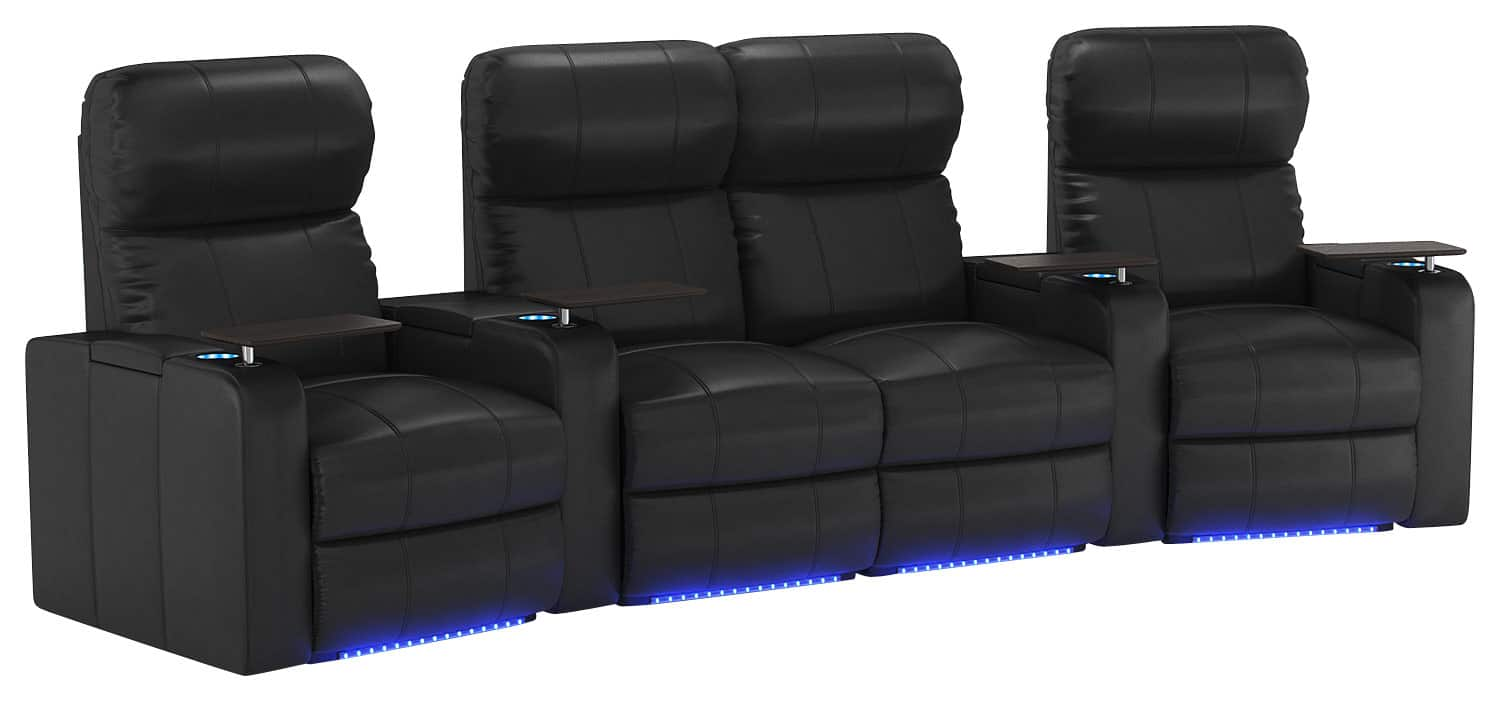
Octane Seating - Turbo XL700 4-Seat Curved Power Recline Home Theater Seating with Middle Loveseat - Black

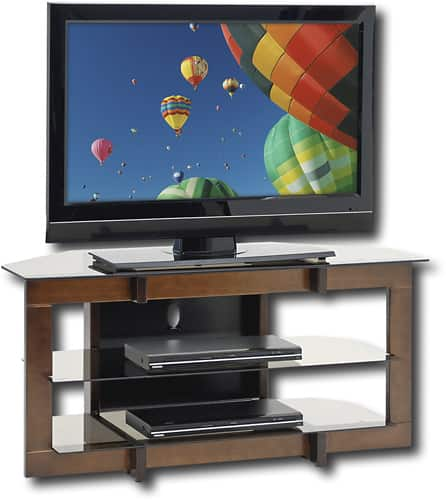
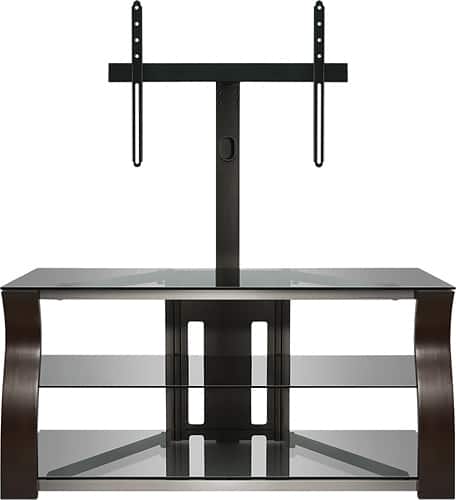
Holds up to 4 A/V components; solid wood construction; 3 glass shelves; brushed nickel hardware; cable management system; includes swiveling wall bracket


Enter Buy Promo Codes during checkout for the discount October 2015. View the Best Buy weekly ad and Deal of the Day online and find a great deal with special sale prices this week at Best Buy.

Tuesday, October 20, 2015

Best Buy Promo Code 2015 20% OFF Entire Purchase:Headphone Buying Guide

>>> Paste Best Buy Promo Code December 2015 during checkout for 20% OFF 1 Best Buy Headphone! Ends Nov 1.2015! Get Best Buy Coupons 20% OFF Entire Purchase for save more!

Whether you crave high-energy tunes to juice up your workout, private listening at home or work, an adrenaline-pumping gaming experience, or just a great-looking, great-sounding accessory to help you express your personal style, you'll find headphones that fit you at Best Buy. Headphones come in a wide variety of styles, and when you consider all the ways in which music can enhance your life, it makes sense to consider more than one pair for different uses. Here's what you need to know to find yours.

  • Over-ear

    Also known as "around-ear" or "full-size" headphones. Characterized by ear cushions that enclose the ears entirely. Usually considered best for overall fidelity, and most models do a good job of isolating the user from outside sounds (also called "passive noise reduction").
  • On-ear

    Similar in design to over-ear models, but rather than enclosing the ears, the cushions sit on the outer ear and are held in place by the elasticity of the headband. Generally deliver high fidelity, but with less bass response than over-ear models. Users can hear outside sounds, and others nearby may hear the music.
  • In-ear

    Properly called in-ear monitors (or IEMs), these headphones fit snugly inside each ear canal. The majority of sports headphones fall into this category. Most models come with foam or rubber nubs in several sizes for a custom fit. Excellent for passive noise isolation, and higher-end models deliver fidelity rivaling that of larger headphones.
  • Earbuds

    Feature small drivers that sit loosely in the ear. Usually deliver lesser fidelity and isolation than other types, but at a highly affordable price. These are the headphones that come with many portable music devices; higher-quality earbuds or in-ear monitors make for an inexpensive upgrade.
  • >>> Best Buy Coupons 20% OFF Entire Purchase now offers Up to 20% OFF Major Appliances! No coupon code required! Exclusions included